 Bordeaux Wine Day Tour
Sauternes Wine: What It Is and How to Visit from Bordeaux
Sauternes wine is Bordeaux's famous sweet white, made from grapes touched by noble rot south-east of the city. This guide explains how the Ciron fog and Botrytis cinerea concentrate the grapes, why pickers walk the rows several times in each try, and how the 1855 ranking put Château d'Yquem alone at the top. It covers the five communes, Barsac's separate appellation, serving temperatures and pairings, and the practical route from Bordeaux. For the wider picture of the left bank, see the Bordeaux wine day tour guide, and for bookable options the comparison of wine day tours on the homepage.
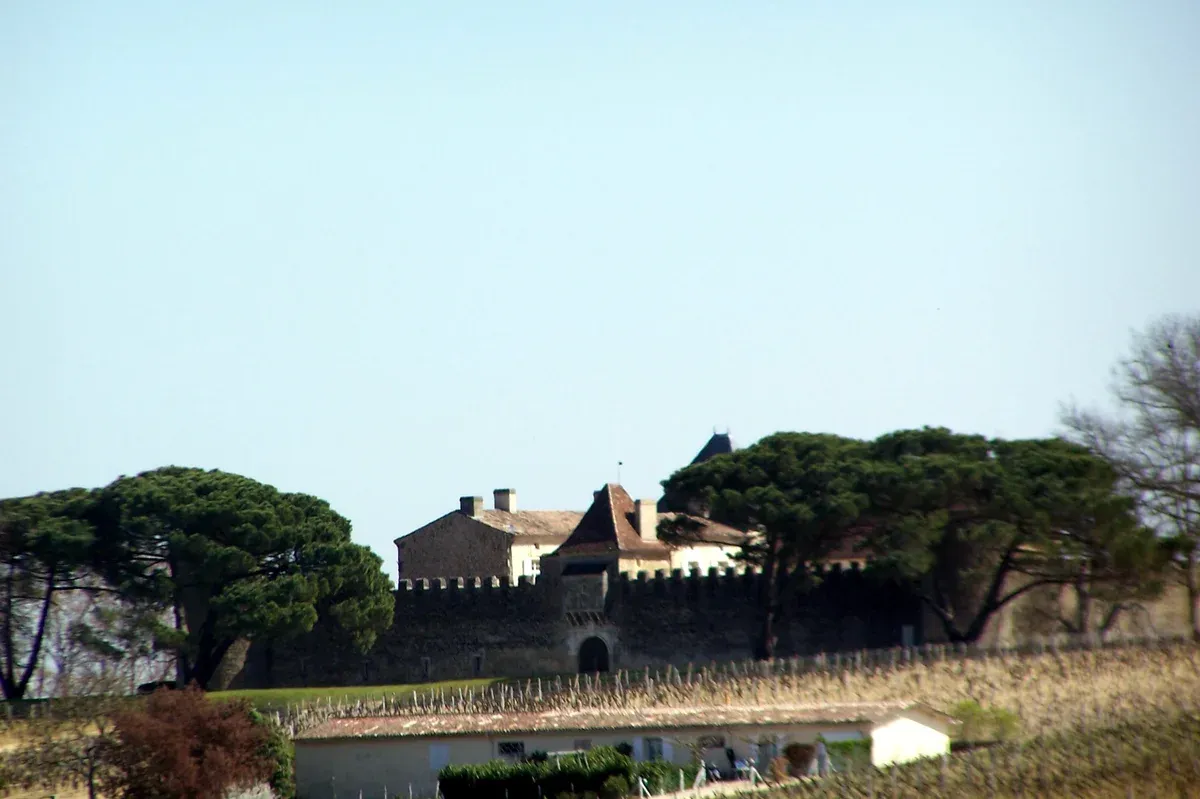
Château d'Yquem seen from the west across its vineyard in Sauternes. Photo: Henry Salomé, CC BY-SA 3.0, via Wikimedia Commons
Quick answer Sauternes in brief
Sauternes wine is a sweet white from Bordeaux, grown on about 1,416 ha across five communes south-east of the city on the Garonne and its tributary the Ciron. Noble rot shrivels Sémillon and Sauvignon Blanc grapes and concentrates their sugar, so the harvest is picked by hand in several passes. The 1855 ranking placed Château d'Yquem alone at the top, above 11 First Growths and 15 Seconds. A bottle must reach at least 13% alcohol and pass a tasting exam for noticeable sweetness.
Key takeaways
- The sweet taste comes from Botrytis cinerea, fed by fog where the Ciron meets the Garonne.
- Twenty-seven estates were ranked in 1855, with Yquem the only Premier Cru Supérieur.
- Serve it chilled at 8 to 10 degrees C. See serving and pairing.
- No group day tour on this site stops in Sauternes. Read how to visit on your own.
What Makes Sauternes Sweet
Sauternes dessert wine owes its sugar to a fungus applied by weather, then concentrated by hand picking.
Noble Rot, the Ciron Fog
Botrytis cinerea, the noble rot, attacks ripe grapes and punctures their skins. Water evaporates and the sugars, acids and minerals concentrate inside. The fungus needs wet conditions followed by drier weather, which is exactly what the local rivers deliver.
The Ciron runs 96.9 km from the Landes forest and joins the Garonne at Barsac, and its cooler water meets the warmer Garonne to throw mist over the vineyards from evening to late morning in autumn. Sunny days follow the mist and dry the grapes. Where the fungus kills yeast instead, fermentation often stops early, which is a second reason the wines keep residual sugar.
The appellation does not regulate residual sugar, but every wine must reach at least 13% alcohol and pass a tasting exam for noticeable sweetness.
Tries, the Repeated Harvest
Rot develops berry by berry, so pickers cannot strip a row in one go. The Sauternes and Barsac syndicate says a harvest can last up to three months, with 3 to 5 successive hand sortings called tries, and French Wikipedia cites 3 to 6 passes under the appellation rules with a minimum must sugar of 221 g/l. Château d'Yquem goes further, with about six passes through its vineyard each year.
In poor vintages an estate can simply give up. Yquem declassified its entire crop nine times in the 20th century and again in 2012, selling no Grand Vin at all those years.
Grapes and Yields
The official blend is Sémillon at 80%, whose thin skin favours the rot, plus Sauvignon Blanc at 20% and a small share of Muscadelle. Yquem plants 80% Sémillon and 20% Sauvignon Blanc on 126 ha, though French Wikipedia gives 133 ha with 102 ha in production and a 75/25 blend. Yields are deliberately low.
French Wikipedia gives the Sauternes AOC an average of 13 hl/ha with a maximum of 25, and Yquem works at about 9 hl/ha against a regional norm of 12 to 20, bottling about 65,000 bottles a year (French Wikipedia says 90,000 to 95,000). Across the appellation the 2023 harvest reached 18,559 hl. In the glass the syndicate counts over 50 aromas in six families, from citrus and exotic fruit to dried candied fruit, orchard fruit, spices and white flowers.
Younger clearer wines show citrus, white peach and acacia, while golden examples lean toward candied and dried fruit.
Sources: Sauternes AOC on Wikipedia), Sauternes and Barsac syndicate
The Five Communes and Barsac
One appellation name covers five communes on the left bank of the Garonne, and one of them can also label its wine under a name of its own.
Sauternes, Barsac, Bommes, Fargues and Preignac
Wikipedia puts the area about 40 km south-east of Bordeaux, and Gironde tourism puts the Maison du Sauternes 47 km from the city. French Wikipedia records the Sauternes AOC at 1,416 ha in 2023 across the five communes. The table summarises what each is known for in the source material.
Barsac stands apart because it holds its own AOC covering only its commune with 333 ha planted and 47 producers, making 4,144 hl at an average yield of 12 hl/ha. Producers in Barsac may label their wine as either Barsac or Sauternes. The neighbouring bank of the Garonne adds more sweet wine at Cadillac-sur-Garonne, directly across the river, under the separate Cadillac AOC.
| Commune | Note |
|---|---|
| Sauternes | Gives the appellation its name. 788 inhabitants in 2023 on 11.32 km2, and home to the Maison du Sauternes. |
| Barsac | Has its own AOC with 333 ha and 47 producers. Classified names include Coutet and Climens among the Firsts. |
| Bommes | One of the five communes of the Sauternes AOC, not stated further in the sources. |
| Fargues | One of the five communes of the Sauternes AOC, not stated further in the sources. |
| Preignac | One of the five communes of the Sauternes AOC, not stated further in the sources. |
Sources: Wikipedia, Sauternes wine), Barsac AOC, French Wikipedia)
What You Need to Know About Sauternes Wine
Sauternes, noble rot and how the wine is made. Third-party video by Julien Miquel. This site did not shoot it and has no relationship with the creator.
The 1855 Sauternes Ranking and Yquem
Sweet whites got their own 1855 list, separate from the red Médoc ranking, and one estate has sat above it ever since.
Three Tiers, 27 Estates
The 1855 classification was drawn up for the Exposition Universelle in Paris at the request of Napoleon III, to show visitors the best Bordeaux wines. Sauternes and Barsac were ranked alongside the reds, and the syndicate notes they were among the first appellations registered as French AOCs. Unlike the red list, the Sauternes list has had no change.
The counts below come from the syndicate and Wikipedia, which agree on all three tiers, and more than 120 estates work in the five communes today.
| Rank | Count | Example |
|---|---|---|
| Premier Cru Supérieur | 1 | Château d'Yquem |
| Premiers Crus | 11 | Coutet and Climens in Barsac |
| Deuxièmes Crus | 15 | Myrat, Doisy-Daène, Doisy-Dubroca, Doisy-Védrines, Broustet, Nairac, Caillou and Suau in Barsac |
Château D'Yquem
Yquem is the only Bordeaux estate rated Premier Cru Supérieur, and the only Sauternes with that rank. The estate dates to Jacques Sauvage in 1593 and passed to the Lur-Saluces family by marriage in 1785. LVMH bought 38% in 1996 and took control from 1999, and Pierre Lurton has managed it since 2004.
Harvesting takes about six tries, yields run near 9 hl/ha and production is roughly 65,000 bottles a year (French Wikipedia says 90,000 to 95,000). Its dry white, named Y, has been made since 1959. The estate's reputation is old: Thomas Jefferson documented that George Washington ordered 30 dozen bottles of Yquem.
Top Sauternes can age beyond 100 years, so an older bottle should be served a few degrees warmer than a young one.
Sources: 1855 classification on Wikipedia, Sauternes and Barsac syndicate history
Serving and Pairing Sauternes
Sweet does not mean heavy. Chilled and paired with salt or savoury food, a Sauternes dessert wine works across a whole meal.
Temperature and Bottle Size
The two Wikipedias give slightly different numbers for serving. French Wikipedia says 8 to 9 degrees C for the appellation, and English Wikipedia says typically chilled at 10 degrees C, a few degrees warmer for wines over 15 years old. Anything between 8 and 10 degrees C is a safe reading, and let old bottles come up a little.
Note that Sauternes is typically sold in half bottles of 375 ml, which suits a wine poured in smaller glasses at the end of a meal.
Pairings
The Sauternes and Barsac syndicate lists traditional pairings of roast chicken, foie gras and chocolate cake, and also promotes the wine as an aperitif and in cocktails. Foie gras is the pairing English Wikipedia calls classic. The aroma range of citrus, orchard fruit, candied fruit, spice and white flowers explains why the wine copes with both savoury starters and dessert.
Clearer young Sauternes with citrus and white peach notes suits the lighter end of that list, while golden wines with candied and dried fruit stand up to richer dishes.
Sources: Sauternes on Wikipedia), Sauternes and Barsac syndicate
Visiting Sauternes from Bordeaux
Sauternes is about 50 minutes by car from Bordeaux, and one wine house offers free tastings.
Getting There and the Maison Du Sauternes
Wikipedia puts the five communes about 40 km south-east of Bordeaux, Gironde tourism puts the Maison du Sauternes 47 km out, and a route calculator gives 55.9 km by road and about 50 minutes, including 37 km of motorway on the A630. The easiest first stop is the Maison du Sauternes at 14 Place de la Mairie, 33210 Sauternes. Gironde tourism says it brings together eighty producers (another listing says 60), offers free tastings and sells at the same price as the châteaux.
Gironde tourism gives opening hours of 10:00 to 13:00 and 14:00 to 18:00 daily except 25 December and 1 January, while another listing gives 9:00 to 19:00 on weekdays and 10:00 to 19:00 at weekends, so confirm before you go. It also sells foie gras, jams, chocolate and rusks from local producers. For château visits, ask each estate directly about booking and price.
If you want the broader left-bank context, the Graves wine guide covers the neighboring Graves region.
The Honest Note About Tours
None of the day tours listed on this site includes Sauternes as a stop. Every bookable group departure goes to Saint-Émilion, the Médoc, Margaux, Graves or Pomerol, so a Sauternes dessert wine day means going on your own, or asking a tour operator directly whether they will run a private day south of the city. The closest option on the books is Graves and Saint-Émilion Picnic Day, at $199.83 for 9 hours with up to 10 tastings across 3 wineries and a gourmet picnic lunch at a château.
It heads south into the Graves but stops short of Sauternes. To compare every departure, price and group size in one place, use the Bordeaux wine day tour comparison table on the homepage.
Sources: Gironde tourism, Maison du Sauternes
Sauternes Questions
How do you serve Sauternes wine?
Chill it. French Wikipedia gives 8 to 9 degrees C for the appellation and English Wikipedia says typically 10 degrees C, a few degrees warmer for bottles over 15 years old. It is usually sold in 375 ml half bottles. See the serving and pairing section.
What grapes are in Sauternes?
The official blend is Sémillon at 80%, whose thin skin favours noble rot, plus Sauvignon Blanc at 20% and a small share of Muscadelle. Yquem plants 80/20 Sémillon and Sauvignon Blanc on 126 ha (French Wikipedia gives 133 ha and 75/25). More detail in what makes Sauternes sweet.
Why is Sauternes so sweet?
Botrytis cinerea, the noble rot, removes water from the grape and concentrates sugars, acids and minerals, helped by autumn mist where the cooler Ciron meets the warmer Garonne. Fermentation also often stops early because the fungus produces a compound that kills yeast. Read about the Ciron fog and the tries.
What is the difference between Sauternes and Barsac?
Barsac is one of the five Sauternes communes but also holds its own AOC covering 333 ha with 47 producers. Barsac producers may label their wine either Barsac or Sauternes, and its classified estates include Coutet and Climens. See the five communes and Barsac.
Can you visit Sauternes on a day tour from Bordeaux?
Not on a scheduled group departure from this site, none of which lists Sauternes as a stop. The Maison du Sauternes offers free tastings and is about 50 minutes by car from Bordeaux by one route calculator, with opening hours that differ between listings. The nearest bookable option is the Graves and Saint-Émilion picnic day.